Seasoned vs. Kiln-Dried Firewood: What’s the Difference & Why It Matters
Seasoned vs. Kiln-Dried Firewood: What’s the Difference & Why It Matters
If you’ve ever looked into ordering firewood, you’ve probably come across some common terms including seasoned and kiln-dried. At first glance, they might seem interchangeable—but the way each type of wood is prepared can make a noticeable difference in how your fire burns, how much heat you get, and how much work it takes to keep things running smoothly.
What Is Seasoned Firewood?
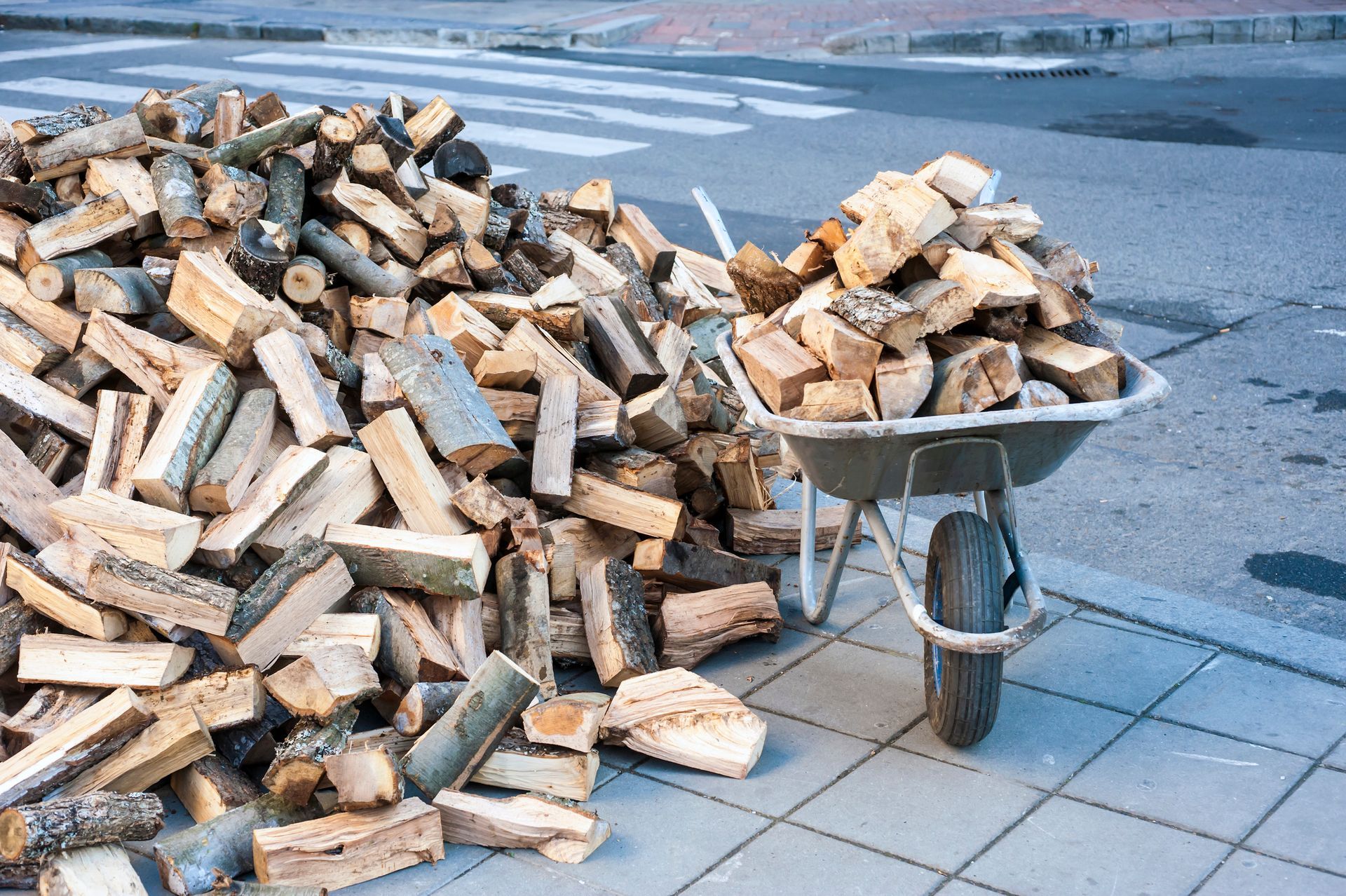
Seasoned firewood is wood that’s been cut, split, and left to dry naturally over time. This process relies on airflow, sun, and patience— which typically takes anywhere from several months to over a year.
During this process, moisture content is reduced as the wood is exposed to air, sun, and wind. When done properly, seasoned wood reaches a moisture level that allows it to burn effectively.
You’ll often notice that seasoned wood:
- Feels lighter than freshly cut wood
- Has cracks on the ends
- Burns well—but may take a bit longer to get going
- It is less expensive than kiln-dried options
What Is Kiln-Dried Firewood?
Kiln-dried firewood takes a more controlled approach. Instead of waiting for the wood to dry out, it is placed in a high-temperature kiln where heat and airflow remove moisture quickly and evenly. This process rapidly reduces moisture content while also eliminating pests, mold, and fungi.
What stands out with kiln-dried wood:
- Has a lower moisture content
- Lights quickly and easily
- Burns hotter and more consistently
- Produces minimal smoke
- Is free of insects and mold due to the high heat
Why Moisture Content Makes All the Difference
Moisture content is the single most important factor in firewood performance. Wood with higher moisture has to burn off that water before it can produce real heat. That means:
- Slower ignition
- More smoke
- Less efficient heating
Drier wood, or wood with less moisture ignites quickly, burns hotter and creates less smoke. Wet or improperly dried wood can also lead to dangerous creosote buildup in chimneys, increasing the risk of chimney fires.
Which One Should You Choose?
If you prefer a more traditional, budget-friendly option and don’t mind managing moisture and storage, seasoned firewood can absolutely do the job. For indoor fireplaces, wood stoves, and consistent heat output, kiln-dried firewood is typically the better investment.
Your Source for High-Quality Firewood?
Whether you’re stocking up for the season or need dependable heat right away, choosing the right firewood supplier makes all the difference. If you’re looking for high-quality firewood for sale, you can rely on Wooden Nickels Firewood.
We provide firewood for Buxton, Cape Elizabeth, Casco, Cumberland, Falmouth, Freeport, Gorham, Gray, Limington, Naples, New Gloucester, Old Orchard Beach, Portland, Raymond, Saco, Scarborough, Sebago, South Portland, Standish, Windham, Yarmouth, Westbrook, ME and beyond. Reach out today to schedule your delivery!